
Key Takeaways
- Shipping insurance for cameras and drones replaces weight-based carrier liability with coverage based on your declared invoice value.
- Standard carrier liability caps payouts at $4.41 per kilogram ($2 per pound) on a standard bill of lading, unless a higher value is declared, which is why you must insure camera equipment in transit.
- Internal mechanical and electrical derangement without external package damage is excluded under standard cargo policies, ShipSimple’s included, unless caused by an insured peril, making proper drone shipping protection essential.
- High-value electronics shipping requires professional packing, as damage from insufficient packing is an absolute exclusion across the insurance market.
- All-risk cargo insurance allows shippers to claim on proof of physical loss or damage, removing the need to prove carrier negligence.
Shipping insurance for cameras and drones is a specialized all-risk policy that protects high-value photography and aerial equipment against physical loss, theft, and external damage during transit. It replaces weight-based carrier liability limits with coverage based on the declared value of the goods. This financial protection means that businesses and professionals can recover their capital if a shipment is destroyed or stolen before final delivery.
When you ship high-end technology, you are not just sending a box. You are moving precision tools, valuable business assets, and delicate electronics through a rigorous supply chain. Whether you are a professional photographer sending a cinema camera for a client shoot, a drone operator fulfilling a commercial order, or a retailer moving inventory, the transit environment is inherently hostile to fragile gear.
In the modern logistics landscape, shipping volumes for sensitive electronics are climbing rapidly. Consequently, the associated risks are multiplying. From severe impact damage and mysterious disappearance to targeted cargo theft, high-ticket gear faces numerous threats between the warehouse and the final destination, making drone shipping protection vital. Relying solely on default carrier limits leaves shippers exposed to devastating financial losses. Securing proper shipping insurance for cameras and drones helps stabilize margins and protect your balance sheet.
What Is Shipping Insurance for Cameras and Drones?
Shipping insurance for cameras and drones is a financial risk mitigation tool that indemnifies shippers for physical loss or damage to their equipment during transit. It operates on a declared value basis rather than a weight-based tariff, meaning that lightweight but expensive gear is properly valued. This coverage attaches from the moment the goods leave the origin premises until final delivery, providing comprehensive warehouse-to-warehouse protection when you insure camera equipment in transit.
The Financial Exposure of High-Tech Transit
Cameras and drones represent a unique challenge in logistics. They possess an exceptionally high value-to-weight ratio. A professional mirrorless camera body or a commercial drone might weigh less than five pounds but carry an invoice value exceeding $10,000. If a shipper relies on standard carrier terms, a total loss of that five-pound package might yield a maximum payout of just ten dollars. This massive discrepancy between the invoice product cost, or CIF + 10% recommended, elected when you book, and the carrier’s default liability limit creates a severe financial exposure for the shipper, highlighting the need for all-risk cargo insurance.
To mitigate this exposure, businesses must insure camera equipment in transit using a dedicated policy. A proper policy allows the shipper to declare the invoice product cost, or CIF + 10% recommended, elected when you book. This valuation model means that the shipper is made whole up to the declared value if a catastrophic transit event occurs.
Carrier Liability vs. All-Risk Coverage
It is critical to understand that carrier liability is not all-risk cargo insurance. Carrier liability is a legal framework designed to protect the carrier from excessive financial claims. Under this framework, the carrier accepts a strictly limited amount of responsibility for the goods they transport. To collect a payout, the shipper must prove that the carrier’s direct negligence caused the damage.
Conversely, all-risk cargo insurance is a first-party property policy. It protects the financial interest of the shipper. All-risk shipping insurance for cameras and drones changes two things: your goods are valued at CIF + 10% instead of the carrier’s weight-based cap, and you collect on proof of physical loss or damage rather than proof of carrier negligence. It does not broaden the list of covered perils beyond standard cargo market terms, but it fundamentally changes what you need to show and the valuation metric in the shipper’s favor.
5 Critical Risks When Shipping High-Value Photography and Drone Equipment
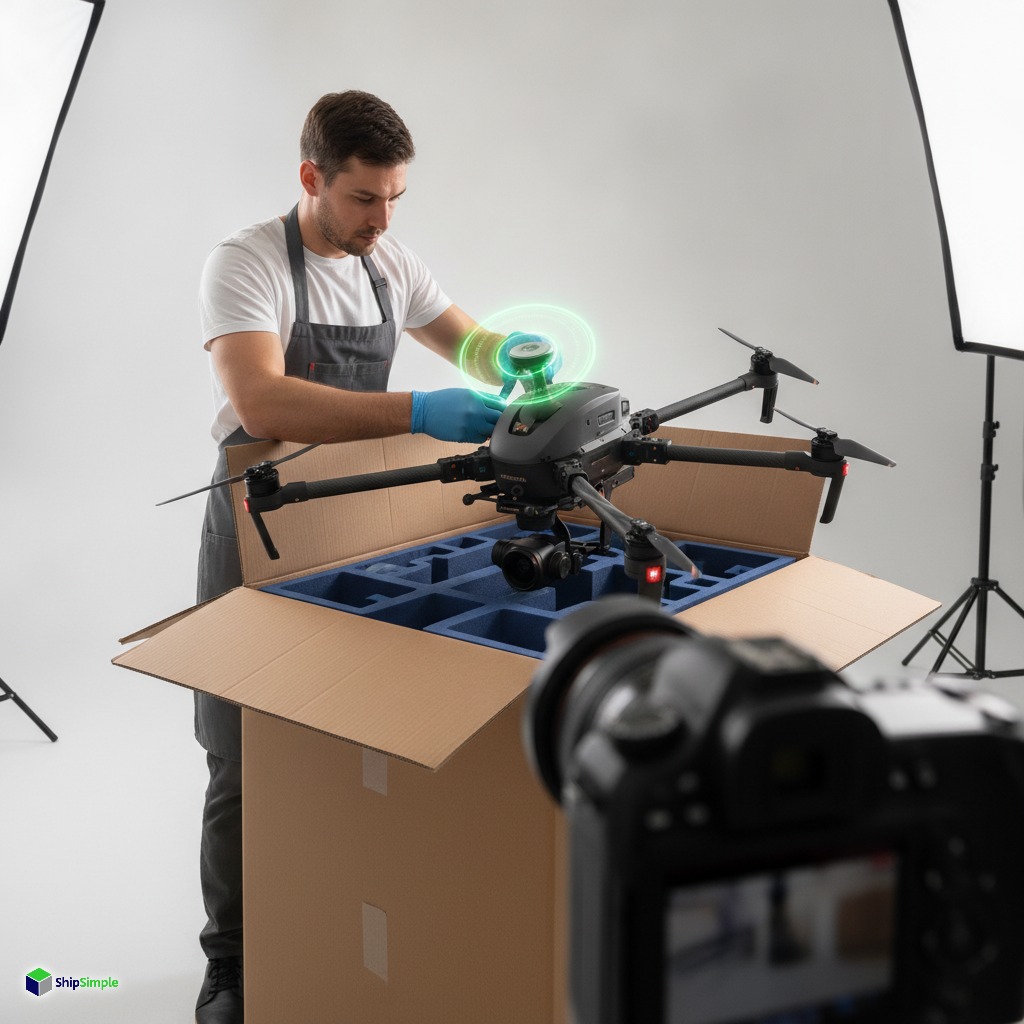
The five critical risks when shipping high-value photography and drone equipment include severe impact damage, targeted cargo theft, environmental exposure, lost packages, and damage resulting from insufficient packing. Mitigating these threats requires a combination of professional packaging, secure carrier selection, and comprehensive all-risk cargo insurance. Understanding these vulnerabilities allows shippers to engineer risk out of their logistics operations.
Impact Damage and Transit Shocks
Despite the best efforts of couriers like Canada Post, FedEx, UPS, DHL, and Purolator, packages are routinely subjected to drops, crushing forces, and impacts during sorting and transit. A severe drop can shatter camera lenses, snap drone gimbal mounts, and destroy internal sensors.
However, shippers must understand the boundaries of coverage regarding internal electronics. If a camera or drone arrives looking perfectly intact on the outside but fails to power on, that is classified as mechanical and electrical derangement (M&ED). Internal mechanical and electrical failure without external evidence of package damage is excluded under standard cargo insurance, ShipSimple’s included, unless an insured peril caused it. Coverage applies when there is clear physical evidence that a transit event, such as a collision or a dropped container, caused the internal damage, a key benefit of shipping insurance for cameras and drones.
Theft, Pilferage, and Fictitious Pickups
High-value electronics shipping is a primary target for organized cargo theft. Cameras and drones are highly liquid assets that are easy to fence on secondary markets. According to Verisk CargoNet, 2023 saw a 59% increase in cargo theft events across the United States and Canada.
Thieves employ various tactics, from pilfering individual packages at sorting facilities to executing sophisticated fictitious pickups where fraudulent carriers steal entire pallets of electronics. Uninsured shippers bear the full financial brunt of these crimes without proper high-value electronics shipping coverage. Proper drone shipping protection means that if your equipment is stolen in transit, you can recover the declared value of the stolen goods.
Environmental Exposure and Condensation
Cameras and drones contain sensitive optics and microprocessors that react poorly to extreme temperature fluctuations and moisture. If a package is left on a loading dock in freezing temperatures and then moved into a heated warehouse, condensation can form inside the lenses or on the circuit boards.
Shippers must be aware that rust, oxidization, and discolouration (ROD) are excluded under standard cargo policies, ShipSimple’s included, unless caused by an insured peril. Similarly, damage resulting from inherent vice (the natural tendency of a product to degrade) is an absolute exclusion. Shippers must use desiccants and climate-appropriate packaging to prevent moisture damage, as insurance is designed for sudden and accidental transit events, not natural environmental degradation, a standard rule when you insure camera equipment in transit.
Lost Shipments and Misrouting
Even the most advanced logistics networks lose packages. Barcodes become unreadable, labels are torn off, and boxes are misrouted to the wrong facilities. When a high-value drone vanishes into the supply chain, the financial impact is immediate, underscoring the value of drone shipping protection.
With proper shipping insurance for cameras and drones, recovering from a lost shipment is straightforward. The claim can proceed once the carrier’s waiting period has passed, using tracking that shows non-delivery. There is no need to engage in a months-long battle with the carrier to prove they lost the item; the tracking data itself serves as the necessary proof.
The Danger of Insufficient Packing
High-value electronics shipping requires rigorous, professional packaging to survive transit. Ordinary road or rail vibration is not an insured peril. If a shipper places a heavy cinema camera loose inside a cardboard box with minimal bubble wrap, the resulting damage is entirely predictable.
Damage resulting from insufficiency or unsuitability of packing or preparation is an absolute exclusion under standard cargo insurance, ShipSimple’s included. Shippers must engineer their packaging to withstand the normal rigors of transit. This means using custom-cut foam, double-walled corrugated boxes, and proper blocking and bracing techniques to isolate the equipment from shock and vibration.
How Carrier Liability Fails High-Tech Shippers
Carrier liability fails high-tech shippers because it caps payouts at $4.41 per kilogram ($2 per pound) on a standard bill of lading, unless a higher value is declared. Carriers require the shipper to prove that carrier negligence directly caused the loss before approving any payout. This framework leaves shippers of lightweight, high-value cameras and drones severely under-compensated during a total loss, which is why drone shipping protection is necessary.
The Weight-Based Payout Trap
The most significant flaw in relying on carrier liability for high-value electronics shipping is the weight-based payout structure. Couriers and freight carriers calculate their default liability based on the physical weight of the package, completely ignoring the retail or invoice value of the contents inside.
If a courier loses a three-pound package containing a $4,000 drone, the default liability calculation will yield a payout of roughly six dollars, proving why you must insure camera equipment in transit. This is not a penalty or a mistake; it is the exact legal limit of the carrier’s responsibility as outlined in their terms and conditions. Shippers who fail to secure supplemental shipping insurance for cameras and drones are effectively self-insuring the difference between the carrier’s limit and the invoice product cost, or CIF + 10% recommended, elected when you book.
The Burden of Proving Carrier Negligence
Even if a shipper is willing to accept a weight-based payout, collecting that money is notoriously difficult. Under carrier liability rules, the shipper must prove that the carrier was negligent and that this negligence directly caused the damage.
Carriers protect themselves, so the shipper has to go above and beyond to prove the carrier was negligent before a claim is approved, and even then the payout is capped by weight. If a package is damaged by an act of nature, a severe weather event, or an unavoidable traffic accident, the carrier can legally deny the claim entirely by citing a force majeure clause.
Lengthy Claims Processing Times
When a business suffers a loss during high-value electronics shipping, cash flow is immediately impacted. The business must replace the damaged equipment or refund the customer, tying up capital while waiting for a resolution.
Carrier liability claims can take months to resolve. The carrier will conduct internal investigations, request extensive documentation, and often push back on the shipper’s assertions of negligence. For a small business or an independent creator, waiting 90 days or more for a minimal payout is financially crippling. Dedicated drone shipping protection provides a much faster path to indemnification.
Strategic Advantages of All-Risk Shipping Insurance for Cameras and Drones
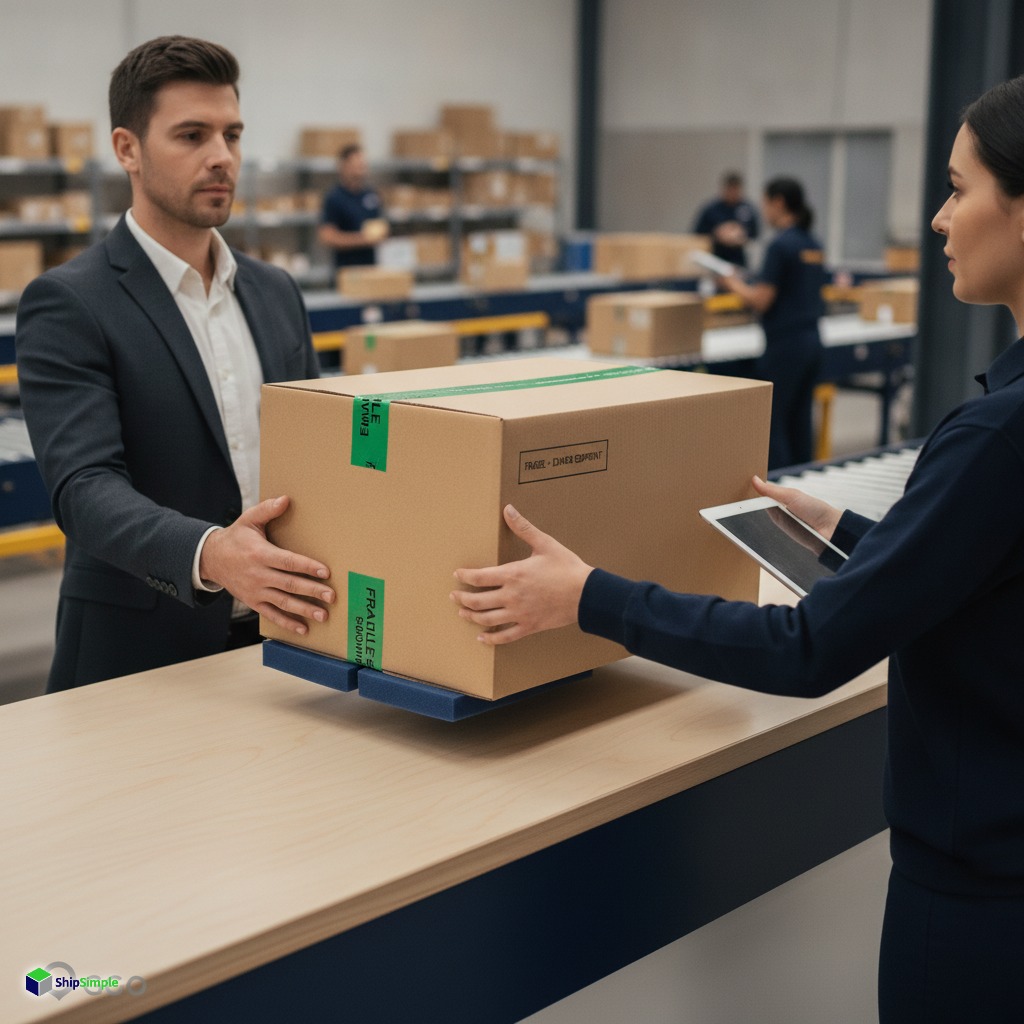
The strategic advantage of all-risk shipping insurance for cameras and drones is that it values goods at their declared invoice cost, or CIF + 10% when elected at booking, rather than a weight-based metric. Shippers collect on proof of physical loss or damage rather than proof of carrier negligence. It does not broaden the list of covered perils beyond standard cargo market terms, but it fundamentally changes the claims process.
Valuation at CIF + 10%
The primary benefit of a dedicated policy is the ability to declare the true value of your shipment. The default valuation basis is declared and rated at invoice product cost. However, shippers can choose to insure on a CIF + 10% basis, elected when you book.
This valuation model covers the Cost of the goods, the Insurance premium, and the Freight charges, plus an additional 10 percent to help offset the administrative burden of managing the loss. This means that the shipper is indemnified up to the declared value, protecting their capital and stabilizing their margins.
Streamlined Claims Without Proving Negligence
All-risk cargo insurance removes the adversarial nature of carrier claims. Because it is a first-party property policy, the insurer is not looking to assign blame to the carrier before paying the shipper.
To secure a payout, the shipper simply needs to provide photos and a description of the damage, or tracking showing non-delivery once the carrier’s waiting period has passed, with no need to prove carrier negligence. This streamlined approach drastically reduces the administrative burden on the shipper and accelerates the timeline for receiving funds when you rely on drone shipping protection.
High Limits for Professional Gear
Professional photography kits and commercial drone setups can easily exceed $50,000 in value. Standard courier limits are entirely inadequate for these shipments, making it essential to insure camera equipment in transit.
ShipSimple provides robust limits to accommodate high-value electronics shipping. The platform offers limits of $250,000 for Parcel shipments and $500,000 for Freight shipments, with higher limits available per customer upon review. This capacity means that even the most expensive cinema cameras and specialized aerial mapping drones can be fully protected during transit.
Strategic Snapshot: Carrier Liability vs. All-Risk Insurance
| Feature | Standard Carrier Liability | ShipSimple All-Risk Insurance |
|---|---|---|
| Valuation | $4.41 per kilogram ($2 per pound) on a standard bill of lading, unless a higher value is declared | Invoice product cost, or CIF + 10% recommended, elected when you book |
| What You Need to Claim | Proof the carrier was negligent | Photos and a description of the damage (for freight, plus a repair estimate or third-party confirmation), or tracking showing non-delivery once the carrier’s waiting period has passed, with no need to prove carrier negligence |
| Claim Time | Can take months | Under 30 days for approved submissions |
| Shared Exclusions (e.g., M&ED, improper packing) | Excluded | Excluded unless caused by an insured peril |
Fact Block: The Reality of Electronics Shipping
- Carrier Limits: Standard liability is capped at $4.41 per kilogram ($2 per pound) on a standard bill of lading, unless a higher value is declared.
- Theft Increases: Verisk CargoNet reported a 59% increase in cargo theft across the U.S. and Canada in 2023.
- Electronics Deductible: Under ShipSimple’s schedule, electronics carry a deductible of 3% of the total insured value, minimum $500.
- Parcel Capacity: ShipSimple offers automated coverage limits up to $250,000 for parcel shipments.
Best Practices for Packaging and Securing Camera and Drone Shipments
Best practices for packaging and securing camera and drone shipments require double-boxing, custom foam inserts, and strict adherence to lithium battery regulations. Professional packing prevents internal shifting and absorbs external shocks during transit. Because insufficient packing is an absolute exclusion under standard cargo insurance, ShipSimple’s included, shippers must engineer their packaging to withstand the rigors of the modern supply chain.
Professional Crating and Double-Boxing
High-value electronics shipping demands rigorous packaging protocols. A single layer of cardboard is never sufficient for a $5,000 camera body. Shippers must employ a double-boxing strategy.
The camera or drone should be placed inside a primary container, ideally a hard-shell case with custom-cut foam inserts that perfectly match the contours of the equipment. This primary case should then be placed inside a heavy-duty, double-walled corrugated outer box. The void space between the inner case and the outer box must be filled with dense packing material to prevent any movement. If the equipment can shift inside the box during transit, the packaging is insufficient.
Securing Lithium-Ion Batteries
Drones and modern cameras rely on high-capacity lithium-ion batteries, adding complexity to high-value electronics shipping. These batteries pose a significant fire risk if they are damaged, short-circuited, or exposed to extreme heat during transit.
Shippers must comply with all International Air Transport Association (IATA) regulations when shipping lithium batteries by air. Batteries should be removed from the devices, placed in individual anti-static bags, and packed securely to prevent their terminals from coming into contact with conductive materials. Failure to properly declare and package hazardous materials can result in severe fines and the immediate denial of any insurance claims.
Discreet Labeling and Security Tape
Cargo thieves look for easy targets. A box covered in logos from a high-end camera manufacturer is an invitation for theft. Shippers should always use plain, unbranded outer packaging to obscure the nature of the contents.
Shippers should also seal all packages with tamper-evident security tape. Standard clear packing tape can be easily sliced open and replaced by a thief without leaving obvious signs of tampering. Security tape leaves a visible residue or pattern if it is removed, providing immediate visual evidence that the package was compromised during transit. This evidence is crucial when filing a claim for pilferage.
How to Secure Shipping Insurance for Cameras and Drones via ShipSimple
Securing shipping insurance for cameras and drones via ShipSimple requires completing a fast, automated three-step online workflow. Shippers enter product details, shipment details, and address details to bind coverage instantly. This streamlined platform provides immediate protection for parcels up to $250,000, meaning high-value tech is covered from warehouse to warehouse.
The 3-Step Automated Workflow
ShipSimple is Canada’s only automated shipping insurance platform, designed to eliminate the friction of securing coverage for high-value goods with all-risk cargo insurance. The platform does not move parcels; the carrier moves the box, while ShipSimple protects the value inside.
To insure camera equipment in transit, shippers simply log into the platform and follow a three-step process. First, they input the Product Details, including the declared value and commodity type. Second, they provide the Shipment Details, selecting their chosen courier (such as Canada Post, FedEx, UPS, DHL, or Purolator). Finally, they enter the Address Details to confirm the origin and destination. The system instantly generates a transparent quote, allowing the shipper to bind coverage in seconds.
Fast Claims Resolution
When a transit disaster occurs, speed is critical. ShipSimple’s claims process is entirely digital and coordinated with an adjuster to facilitate rapid resolution.
Shippers submit their claims through the automated online portal. For a damaged camera or drone, the shipper provides photos and a description of the damage. For a lost shipment, the claim can proceed once the carrier’s waiting period has passed, using tracking that shows non-delivery. This efficient workflow results in claims being processed in under 30 days for approved submissions, which is far faster than the lengthy delays typical of carrier liability disputes. By choosing ShipSimple, tech shippers secure their margins, protect their capital, and help keep their high-value equipment protected against the unpredictable risks of the supply chain.
- Get an Instant Shipping Insurance Quote Now
- Learn More About Our All-Risk Damage, Loss, & Theft Coverage
- Contact Our Experts to Secure Your 2026 Shipments
Additional Resources
- Learn More About ShipSimple’s All-Risk Shipping Insurance
- ShipSimple’s Freight & Marine Cargo Shipping Insurance
- ShipSimple’s Parcel Shipping Insurance
- More Helpful Blogs
- Get Your Electronics Shipping Insurance Quote: The 7-Point Advantage
- Shipping Electronics – 7 Critical Dangers to Know to Ship Safely – The 2026 Ultimate Guide
Frequently Asked Questions
What does shipping insurance for cameras and drones actually cover?
Shipping insurance for cameras and drones covers physical loss, theft, and external damage during transit. It protects the declared value of the equipment from the moment it leaves the origin warehouse until final delivery, subject to standard policy exclusions, providing essential drone shipping protection.
Are internal electronics covered if the box arrives undamaged?
No. Internal mechanical and electrical derangement without external evidence of package damage is excluded under standard cargo insurance, ShipSimple’s included, unless caused by an insured peril. There must be proof of a physical transit event to claim under all-risk cargo insurance.
How much does standard carrier liability pay for a lost drone?
Standard carrier liability caps payouts at $4.41 per kilogram ($2 per pound) on a standard bill of lading, unless a higher value is declared. This weight-based limit leaves lightweight, high-value drones severely under-compensated, highlighting the need to insure camera equipment in transit.
What is the deductible for shipping insurance for cameras and drones?
Under ShipSimple’s schedule, electronics, which include cameras and drones, carry a deductible of 3% of the total insured value, with a minimum deductible of $500 per claim for high-value electronics shipping. This percentage ensures that the deductible scales appropriately with the value of the equipment. Shippers should factor this into their risk management strategy when declaring their shipment’s value.
What happens if my camera is damaged due to poor packaging?
Damage resulting from insufficiency or unsuitability of packing is an absolute exclusion under standard cargo insurance, ShipSimple’s included. Shippers must use professional, double-walled packaging and custom foam to protect high-value electronics when securing shipping insurance for cameras and drones.