
Key Takeaways
- When you buy All Risk shipping insurance, you protect your shipments based on their declared value rather than a carrier’s weight-based liability limit.
- Modern technology has eliminated broker delays, allowing you to secure an instant shipping insurance quote and bind coverage in under a minute.
- Coverage requires proper preparation; losses from insufficient packing or inherent vice are excluded under standard cargo insurance, ShipSimple’s included.
- A dedicated shipping insurance platform allows you to claim against your declared value with no need to prove carrier negligence.
To buy All Risk shipping insurance is to secure comprehensive transit coverage that protects your goods against physical loss or damage based on their declared value. For Canadian businesses moving high-value parcels and freight, relying on standard carrier liability leaves profit margins dangerously exposed to transit disasters.
You have done the essential research, calculated your financial exposure, and recognized the gaps in standard terms of carriage. The final step is securing the right protection from the right partner without disrupting your daily operations.
Historically, securing proper cargo protection was a slow, manual process. It required calling brokers, filling out multi-page application forms, waiting days for a response, and deciphering complex policy jargon.
Today, modern technology has completely revolutionized this workflow. This guide explains the financial mechanics of transit protection, details the critical coverage boundaries you must understand, and shows you exactly how to secure comprehensive coverage in three automated steps.
The Financial Reality of Transit Risk
Relying solely on carrier liability exposes your business to severe financial risk because payouts are capped by weight and require proof of carrier negligence. When you buy All Risk shipping insurance, you value your goods at their actual cost and collect on proof of physical loss or damage, rather than proof of carrier fault.
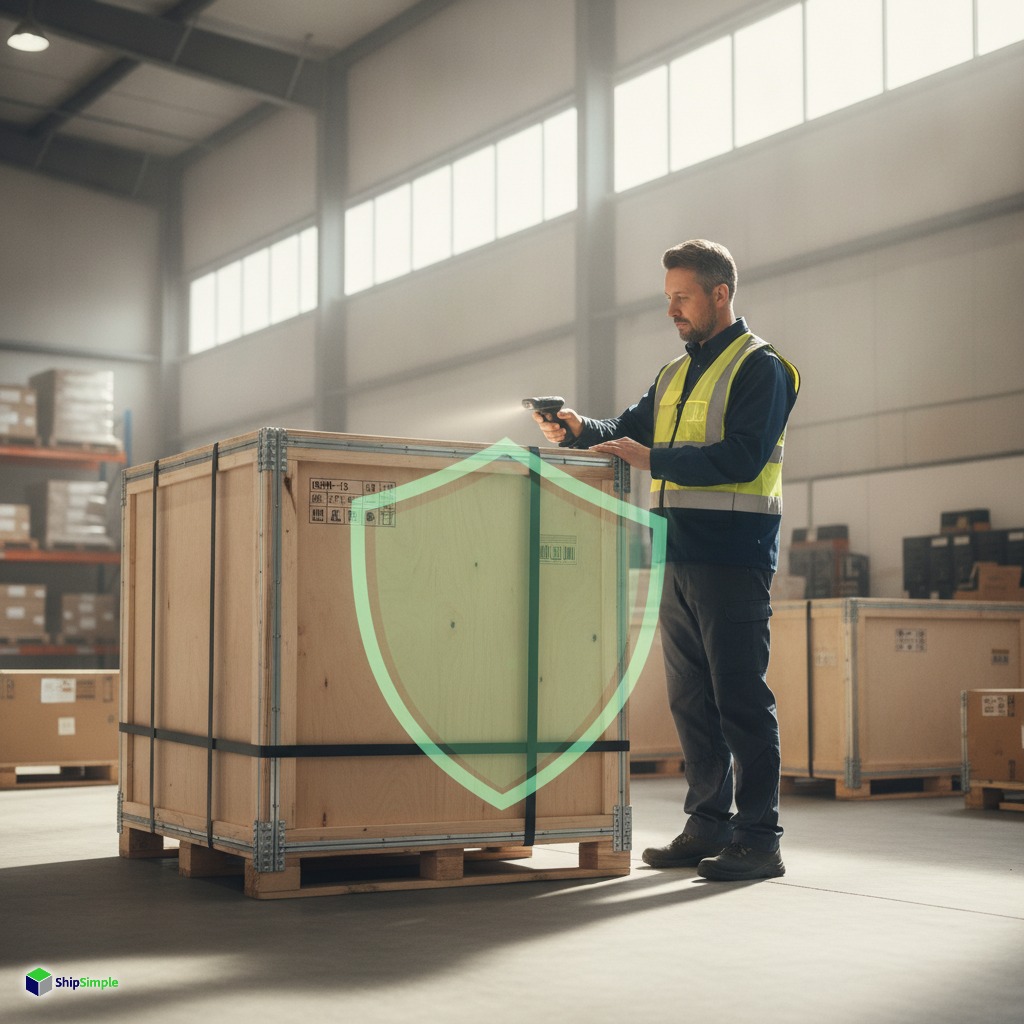
The standard Canadian transport environment operates on strict liability limitations. For domestic freight, the standard bill of lading limits carrier liability to $4.41 per kilogram ($2 per pound) unless a higher value is declared and accepted.
If you ship a specialized industrial control panel that weighs 500 pounds but costs $50,000 to manufacture, a total loss under standard carrier terms yields a maximum payout of just $1,000. This leaves a $49,000 deficit on your balance sheet.
Collecting even that limited amount is notoriously difficult. Carriers actively protect their own margins, employing dedicated claims departments to scrutinize every submission. To secure a payout under standard liability, the shipper must prove that the carrier was directly negligent and that the damage did not result from an act of God, a weather event, or a third-party collision.
This process can take months, tying up your accounting team in endless email chains, and frequently results in denial. The indirect costs of a denied claim, such as replacing the lost inventory out of pocket, managing frustrated end-customers, and absorbing the original freight costs, can severely impact your quarterly cash flow.
A dedicated policy changes this dynamic entirely. You claim against the value you declared, and the requirement to prove carrier negligence is removed from the equation. When you buy All Risk shipping insurance, you are effectively outsourcing this financial uncertainty to a dedicated shipping insurance platform, allowing your logistics team to focus on moving freight rather than fighting legal battles over damaged goods.
Beyond the immediate loss of the product, the secondary financial impacts of a transit disaster can ripple through your entire operation. When a critical shipment is destroyed and the carrier denies the claim, you are forced to absorb the cost of manufacturing or procuring a replacement out of your own working capital. This unexpected drain on resources can delay other projects, strain vendor relationships, and ultimately damage your reputation with the end customer who is left waiting.
In addition, the administrative burden of managing these disputes pulls your logistics personnel away from strategic planning. Every hour spent arguing with a carrier over a weight-based payout is an hour not spent optimizing your supply chain.
When you buy All Risk shipping insurance, you eliminate this operational drag. You transfer the financial risk to a dedicated shipping insurance platform, ensuring that a single transit failure does not compromise your quarterly profitability.
What Does All-Risk Coverage Actually Protect?
All-Risk coverage protects your shipments against physical loss or damage from external causes during transit, from warehouse to warehouse. It covers major transit events like theft, collision, and derailment, but it does not broaden the list of covered perils beyond standard cargo market terms.
Understanding the boundaries of your coverage is just as important as knowing its benefits. The term “All Risk” means that any external physical loss is covered unless it is specifically excluded in the policy wording.
It covers catastrophic events such as a transport truck overturn, a derailed train, a dropped shipping container, or a stolen pallet. It also covers mysterious disappearance, provided the carrier’s waiting period has passed and tracking shows non-delivery.
However, standard exclusions apply across the entire cargo insurance market. Delay, inherent vice, and insufficient packing are never covered. If a load shifts and takes damage because it was poorly blocked and braced inside a container, that is considered insufficient packing and the claim will be denied.
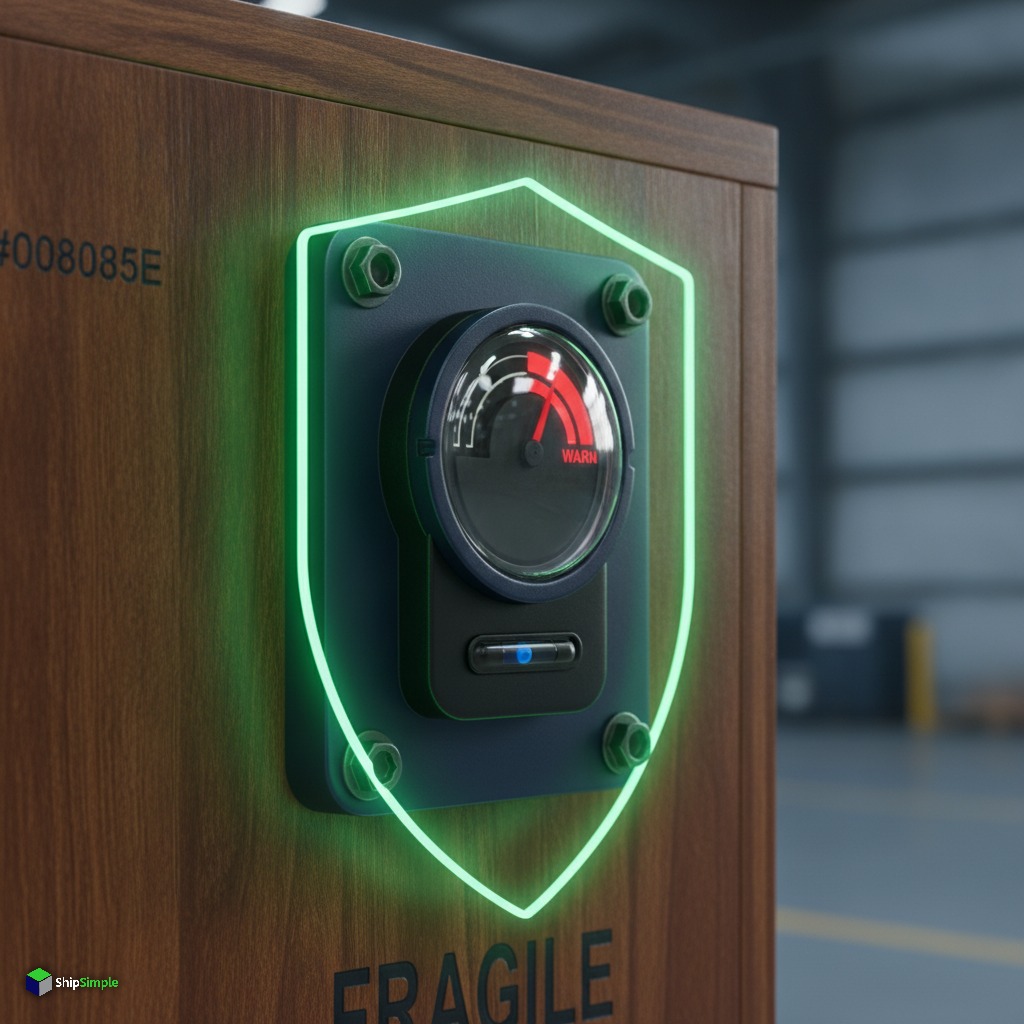
Ordinary road or rail vibration is not an insured peril, ours included. If you are shipping sensitive equipment that could vibrate out of calibration during a standard cross-country haul, that risk must be engineered out using shock isolation and impact loggers.
Mechanical and electrical derangement, rust, oxidization, discolouration, and scratching, denting, marring, or chipping are excluded under standard cargo insurance too, ShipSimple’s included, unless an insured peril caused it. You cannot claim that a machine simply arrived and would not turn on; there must be external evidence of a transit disaster, such as a collision, an overturn, or a dropped crate, that caused the internal failure. The core philosophy of All Risk protection is to indemnify you for sudden, unforeseen physical transit disasters, not to act as a warranty for manufacturing defects or inadequate preparation.
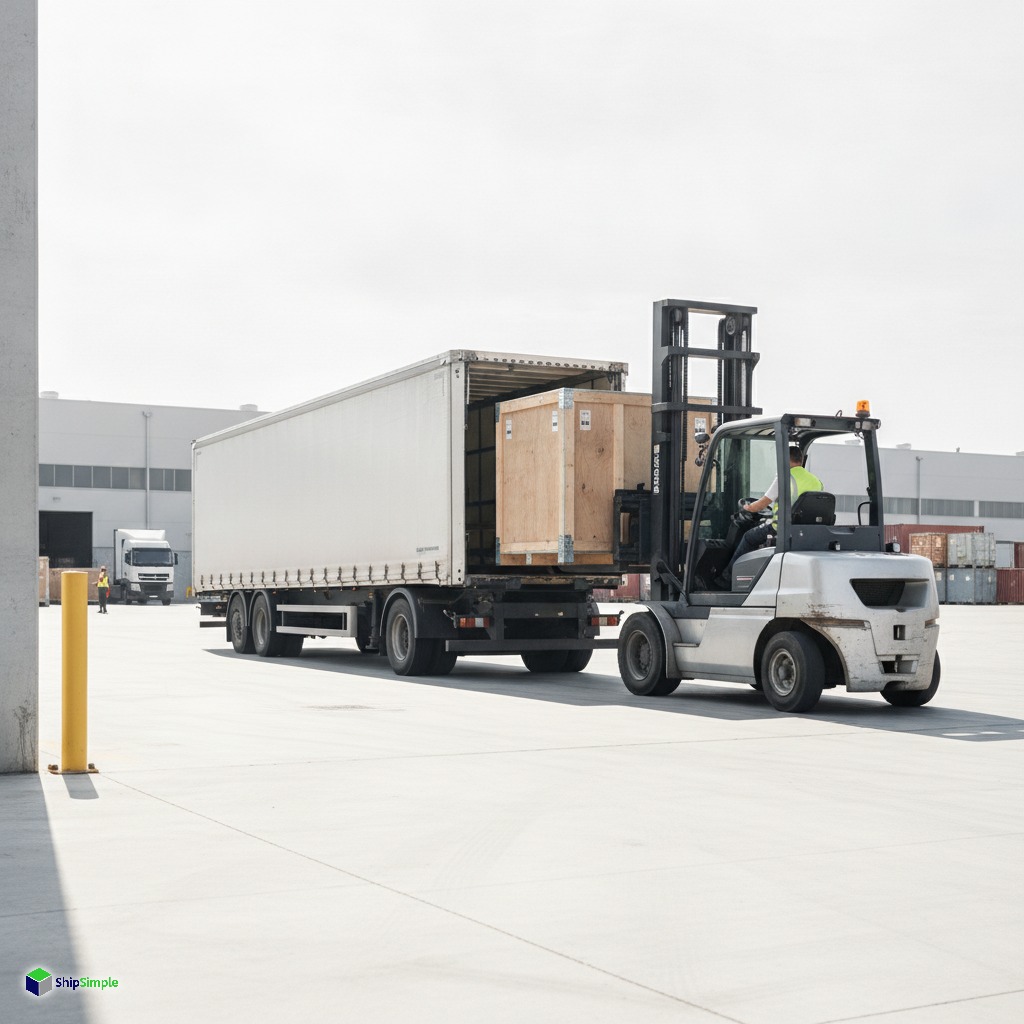
The scope of this protection becomes particularly valuable when considering the full journey of your goods. Because coverage attaches on a warehouse-to-warehouse basis, it includes the critical moments of loading and unloading, which are statistically high-risk periods for heavy freight. If a forklift operator accidentally drops a pallet of sensitive electronics while loading it onto the truck at your facility, that physical impact is a covered peril.
Similarly, if a transport truck is involved in a severe highway collision that crushes your cargo, the resulting damage is covered. However, it is vital to remember that the policy responds to external physical events.
If you ship a vintage guitar and it arrives with finish checking due to temperature fluctuations, that is considered inherent vice and is excluded under standard cargo insurance, ShipSimple’s included. The protection is designed to make you whole after a genuine transit disaster, not to cover the natural vulnerabilities of the product itself. Understanding this distinction ensures you are properly prepared when you buy All Risk shipping insurance.
How to Buy All Risk Shipping Insurance in 3 Steps
You can buy All Risk shipping insurance in three automated steps: enter your product details, input your shipment routing information, and provide the final address details. This streamlined workflow generates an instant shipping insurance quote and binds your policy immediately without manual broker intervention.
The traditional method of securing shipping insurance involved finding a third-party broker, submitting an application via email, and waiting hours or days for a response. This fragmented process pulls logistics managers away from their core duties. A modern shipping insurance platform eliminates these bottlenecks entirely.
Step 1: Product Details and Valuation
The first step is entering the specifics of what you are shipping and determining its value. You will select the commodity type from an approved list and enter the Total Insurable Value (TIV). The default valuation basis is your declared invoice product cost.
Alternatively, you can insure on a CIF + 10% basis, elected when you book. This formula covers the Cost of the goods, the Insurance premium, the Freight charges, plus an additional 10% to absorb hidden administrative costs associated with a loss. Getting this number right ensures that a total loss does not leave you out of pocket for the shipping fees you already paid.
For businesses shipping specialized industrial machinery or custom-fabricated components, that extra 10 percent is crucial. It helps offset the rush shipping fees required to procure replacement parts and the internal labor costs of managing the disruption. By establishing this value upfront, it means your financial recovery aligns with your actual exposure.
Step 2: Shipment Details and Routing
Next, you provide the logistical parameters of the move. This includes selecting the carrier, entering the tracking number or bill of lading, and specifying the shipping dates. ShipSimple supports major parcel couriers including Canada Post, FedEx, UPS, DHL, and Purolator, as well as freight and rail carriers like CN Rail and CPKC.
(If your operations heavily involve intermodal transport, ShipSimple’s sister company, RailGateway, provides specialized B2B rail freight solutions across Canada). The system uses these routing details to assess the transit exposure and calculate the premium.
Step 3: Address Details and Instant Binding
The final step requires the origin and destination addresses. Coverage attaches on a warehouse-to-warehouse basis, meaning it protects the goods from the moment they leave the origin premises until final delivery, including the risk of loading and unloading. It is important to note that a wrongful or improper delivery, such as a carrier dropping a parcel at a fraudulent address, does not count as final delivery.
Once these details are entered, the platform provides an instant shipping insurance quote directly on your screen. With one click to confirm, your policy is bound and active.
There is no waiting for an underwriter to review standard commodities, and your business is immediately protected. This seamless workflow of quoting and binding means you can secure comprehensive shipping insurance in the exact moment you finalize your logistics planning, completely eliminating the traditional friction of third-party broker negotiations.
Freight vs. Parcel: Understanding Limits and Deductibles
Coverage limits and deductibles vary based on whether you are shipping standard parcels or heavy freight. Parcel shipments carry limits up to $250,000 with a nil deductible, while freight shipments are covered up to $500,000 with deductibles based on the specific commodity class.
When you buy All Risk shipping insurance, you must understand how your specific commodity is classified. Parcel shipments generally enjoy a streamlined structure with a nil deductible, making it incredibly easy to protect high-volume e-commerce goods. Freight shipments, due to their size and complexity, operate on a specific deductible schedule.
For example, general merchandise shipped as freight carries a $250 deductible (minimum $2,500 value). High-risk or fragile items, including electronics, wine, spirits, antiques, and watches, carry a deductible of 3% of the total insured value, with a minimum of $500. If you are shipping industrial machinery or construction equipment, the deductible is 1% of the total insured value, minimum $500.
Additionally, certain high-value classes carry strict packing warranties. Antiques, art, jewelry, and watches are warranted professionally packed. Commercial automobiles, boats, and motorcycles are warranted professionally packed, blocked, and braced.
A breached warranty is a severe violation of policy terms and will result in a denied claim. Professional crating is an underwriting requirement for these classes, not a suggestion.
Navigating these limits requires a clear understanding of your specific inventory and its true replacement cost. For businesses shipping mixed loads, it is crucial to declare the accurate Total Insurable Value for each distinct commodity class. If you are moving a $400,000 CNC machine, the 1% deductible means you are responsible for the first $4,000 of a loss, but the remaining $396,000 is fully protected against insured perils like a truck overturn or a dropped container.
This structure provides a predictable financial backstop compared to the catastrophic loss of relying on a $2 per pound carrier limit. It is also important to note that while parcel shipments up to $250,000 generally carry a nil deductible, this does not reduce the requirement for proper preparation.
Whether you are shipping a $50,000 luxury watch via courier or a half-million-dollar industrial press via flatbed, the goods must be packaged to withstand the normal rigors of transit. Using a modern shipping insurance platform allows you to clearly see these deductibles upfront, ensuring there are no surprises if a transit disaster occurs.
The Claims Process: What Happens When Things Go Wrong?
If your shipment is damaged or lost, the claims process requires proof of physical loss rather than proof of carrier negligence. You simply submit photos and a description of the damage, or tracking showing non-delivery once the carrier’s waiting period has passed.
The true test of any shipping insurance policy is how it responds when a disaster occurs. Under standard carrier liability, the claims process is adversarial.
The carrier’s primary goal is to limit their financial exposure. When you use a dedicated shipping insurance platform, the process is designed to indemnify you efficiently.
It is critical to understand that the advantage of a dedicated policy lies in what you claim against and what you have to show. You claim against a value you declared instead of a weight-based tariff, and you do not have to prove carrier fault. A damaged shipment is assessed and settles as either the cost to repair or, where repair is uneconomic against the sum insured, as a total loss at the declared value.
For freight claims, you must provide a repair estimate or independent third-party confirmation of the damage, and you must retain all packaging and the damaged items for inspection. Discarding the crate or the damaged goods before an assessment is complete can severely jeopardize your claim, as underwriters need to verify that the packing warranties were met. You will also need to supply standard commercial documentation, including the original bill of lading and the commercial invoice, to substantiate the declared value.
For missing shipments, the claim can proceed once the carrier’s waiting period has passed, using tracking that shows non-delivery. For approved submissions, this streamlined process typically resolves in under 30 days, a stark contrast to the months spent fighting a carrier liability claim. This rapid resolution is the ultimate benefit of a dedicated policy, ensuring your capital is returned to your business quickly so you can maintain your operational momentum.
Strategic Snapshot: Carrier Liability vs. ShipSimple
Comparing carrier liability to a dedicated policy reveals stark differences in valuation, claims requirements, and settlement speed. A dedicated shipping insurance platform allows you to claim against your declared value rather than fighting to prove carrier negligence for a weight-based payout.
| Feature | Standard Carrier Liability | ShipSimple All-Risk Insurance |
|---|---|---|
| Valuation | $4.41 per kilogram ($2 per pound) on a standard bill of lading, unless a higher value is declared. | Invoice product cost, or CIF + 10% recommended, elected when you book |
| What You Need to Claim | Proof the carrier was negligent | Photos and a description of the damage (for freight, plus a repair estimate or third-party confirmation), or tracking showing non-delivery once the carrier’s waiting period has passed, with no need to prove carrier negligence |
| Claim Time | Can take months | Under 30 days for approved submissions |
| Shared Exclusions | Denied entirely | Excluded unless caused by an insured peril |
| Coverage Attachment | Varies by carrier terms | Warehouse to warehouse, including loading and unloading |
Fact Block: The Data Behind Transit Risk
Understanding the statistical reality of logistics helps clarify why dedicated protection is a balance sheet necessity when you buy All Risk shipping insurance. The data shows that relying on carrier goodwill is a dangerous financial strategy for high-value freight. Cargo theft, supply chain disruptions, and strict carrier liability limits consistently expose unprotected shipments to severe financial losses. Reviewing these industry statistics highlights the critical need for a dedicated shipping insurance platform.
- Carrier Limits: The standard Canadian bill of lading limits carrier liability to just $4.41 per kilogram ($2 per pound) unless a higher value is declared, leaving heavy, high-value goods severely underinsured. (Source: Transport Canada)
- Theft Escalation: Cargo theft remains a critical threat across North America, with Verisk CargoNet reporting hundreds of millions in stolen goods annually, heavily targeting electronics and food and beverage shipments. (Source: Verisk CargoNet)
- Supply Chain Vulnerability: According to the Business Development Bank of Canada, supply chain disruptions and transit delays continue to impact over half of Canadian small and medium-sized businesses, increasing the physical risk to goods in transit. (Source: BDC)
Why Canadian Businesses Choose a Shipping Insurance Platform
Canadian businesses choose an automated shipping insurance platform to stabilize their margins, eliminate broker delays, and secure instant coverage for high-value goods. This digital approach transforms a complex administrative burden into a seamless, one-minute operational step. By moving away from manual broker emails and restrictive carrier limits, logistics teams can protect their cash flow efficiently. Ultimately, this proactive strategy ensures that every outbound shipment is fully secured before it leaves the loading dock.
Running a successful logistics operation in Canada requires mastering efficiency and managing risk simultaneously. Customer expectations are higher than ever, and the stability of supply chains cannot be taken for granted.
In this environment, the choice you make about protecting your shipments is a fundamental part of your business strategy. You can continue down the path of uncertainty, hoping your high-value packages reach their destination safely, or you can choose the path of confidence.
As your business scales, the volume and value of your shipments naturally increase, magnifying your exposure to transit risks. Managing this growing liability through manual broker emails or piecemeal carrier limits quickly becomes unsustainable. A dedicated shipping insurance platform scales effortlessly alongside your operations, providing consistent, reliable protection whether you are shipping ten parcels a week or coordinating daily heavy freight movements across the country.
This digital infrastructure allows your finance team to accurately forecast risk management costs, knowing exactly what the premium will be for every load. It also empowers your sales team to confidently close large deals, knowing they can instantly secure an instant shipping insurance quote to protect the outbound delivery.
By integrating this automated protection into your standard operating procedures, you transform shipping insurance from a reactive afterthought into a proactive tool for business growth. You secure the financial stability needed to expand into new markets, take on larger clients, and navigate the complexities of the Canadian supply chain with confidence.
The path of uncertainty means your cash flow is constantly exposed to the risk of a single incident wiping out your profits. It means your team’s valuable time is spent on the frustrating process of fighting for a carrier claim. Contrast that with the peace of mind that comes from knowing every shipment is fully protected for its true value before it even leaves your loading dock.
Ultimately, the decision to buy All Risk shipping insurance through an integrated partner is an investment in your financial resilience. It protects your cash flow from unforeseen shocks, builds your brand reputation for reliability, and frees your team from administrative headaches.
You have already made the smart decision to protect your business; now you can execute it in the smartest way possible. Do not leave your shipments to chance for another day.
- Get an Instant Shipping Insurance Quote Now
- Learn More About Our All-Risk Damage, Loss, & Theft Coverage
- Contact Our Experts to Secure Your 2026 Shipments
Additional Resources
- Learn More About ShipSimple’s All-Risk Shipping Insurance
- ShipSimple’s Freight & Marine Cargo Shipping Insurance
- ShipSimple’s Parcel Shipping Insurance
- More Helpful Blogs
Frequently Asked Questions
What is the main advantage when you buy All Risk shipping insurance?
When you buy All Risk shipping insurance, the main advantage is that your goods are valued at their declared cost rather than a carrier’s weight-based limit. You also collect on proof of physical loss or damage, with no need to prove carrier negligence.
How do I get an instant shipping insurance quote?
You can get an instant shipping insurance quote by entering your product details, shipment routing, and address information into an automated shipping insurance platform. The system calculates the premium immediately based on your declared value.
Are mechanical failures covered by All Risk policies?
Mechanical and electrical derangement are excluded under standard cargo insurance, ShipSimple’s included, unless an insured peril caused the damage. You must show external evidence of transit damage, such as a collision or dropped crate, to proceed with a claim.
What is the deductible for industrial machinery?
For industrial machinery shipped as freight, the deductible is 1% of the total insured value, with a minimum of $500. Standard parcel shipments typically carry a nil deductible, while other freight classes have specific schedule rates.
Does a shipping insurance platform cover improper packing?
No, damage resulting from insufficient or unsuitable packing is an absolute exclusion under standard cargo insurance, ShipSimple’s included. Goods must be professionally packed, blocked, and braced to withstand the normal rigors of transit.